Hello, business owner!
If you have come here, you probably understand the changes in the modern market. Perhaps you see the competition more prominent, experience a decrease in revenue or are looking for the right path to growth. In a world where everything starts and ends with a digital search, it's hard to ignore the important question for every business: How much does advertising on Google cost? And what is the average daily budget for a sponsored campaign to achieve real results?
The importance of these questions is clear. Investing in a business is serious, and you want to know that every shekel you spend will return to you in profit. So let's understand a little more about Advertising on Google. We will examine the evolution that has brought us to this day, discover the advanced methods for 2025 (and even beyond) and understand how to correctly price your campaigns to ensure high optimization and a good return on investment.
From the revolution of advertising: from "gold marketing" of the past to "Google marketing" of today
Have you ever asked yourself how they advertised before the internet? Businesses have invested a lot of money in advertising on television, radio, newspapers and billboards. It was "expensive marketing" - difficult to measure its impact. You could spend millions on a TV campaign, but you didn't really know how many people saw the ad or how many people came into business because of it. It was a gamble! Only the big businesses could afford it.
Then, in the late 90s and early 2000s, a big change came to the world of marketing: the internet andGoogle. Suddenly, people could search for information and products at the click of a button. Google quickly realized the great potential of this instant desire and created a new platform called Google AdWords (today Google Ads), which changed the rules of the game.
Google Ads: advertising for everyone
From then until now, any business, even the smallest, can appear at the top of the search results. Not only the big businesses and the "rich" can advertise, but with the method Advertising for everyone. model Pay Per Click (PPC) means that you only pay if someone is interested who searched for your product or service and actually clicks on your ad. And that's the big change! Suddenly with this model you can measure everything, know how much you spent on advertising and how much revenue it brought. The ability to target ads to a specific audience (by keywords, location, etc.) and control over the budget made advertising efficient and economical.
Since then, Google has not stopped innovating. The system has evolved and now, in 2025, the use ofartificial intelligence (AI) andmachine learning (ML) turned it into a strong and smart marketing tool. It is not only a search engine, but Answer engine that understands the user's intent in a better way.
Google advertising campaign: what is it anyway?
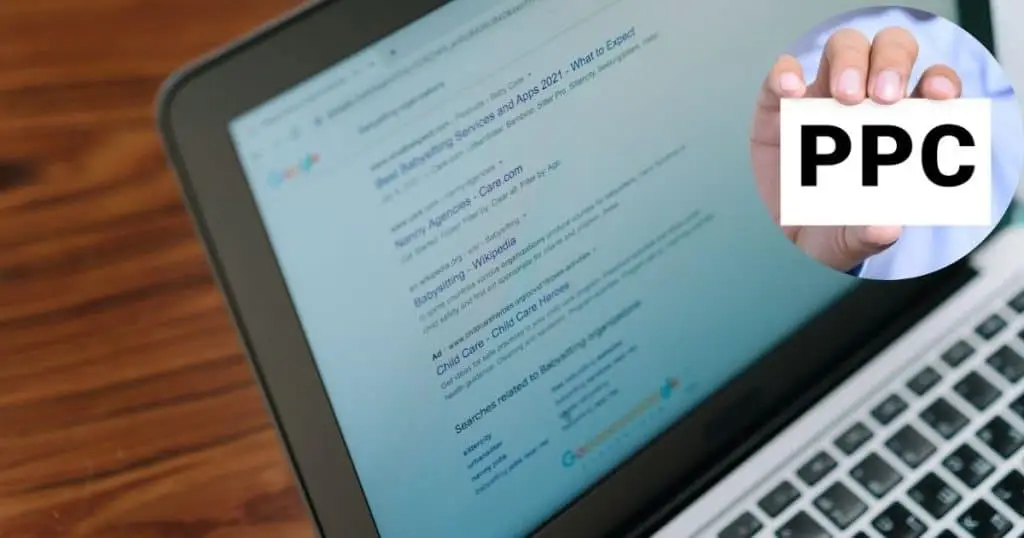
The term "campaign" may seem complicated, but actually Google campaign It is a sequence of definitions, ads and budget intended to achieve a certain business goal. It can be:
- Bringing leads (potential customers) for your business.
- increasing sales directly on the site.
- Building brand awareness and exposure to a wide audience.
- Increasing traffic to the site or to a physical store.
the advantage of Google Ads It is in its ability to reach customers when they are looking for what you offer, in the right place and at the right time - from search results to YouTube videos. Today, in 2025, the AI does this work for you.
Main types of Google campaigns in the age of AI (2025 and beyond)
Choosing the right campaign type is essential, and it also includes thinking about Google's automation:
- Search Network Campaigns: "The money is in the customer's pocket - let the AI find it!"
- what is this These are the ads that appear at the top of Google's search results. When a customer types "computer repair in Ramat Gan" or "vegan catering for events", your ad can appear immediately.
- The innovation in 2025: Most ads are Responsive Search Ads (RSA - Responsive Search Ads). You enter a number of titles and descriptions, and Google's AI puts together the winning combination appropriate for each search. That way your ad will always be relevant.
- The big advantage: This is advertising with High purchase intention. People who are actively searching are more likely to buy from you, and even the AI shortens the process and ensures that your message is accurate.
2. Display Network Campaigns: "To be everywhere - but in a smart and visual way!"
- what is this These are the visual ads (banners, images, and sometimes a short video) that appear on thousands of websites and partner Google apps. Imagine digital billboards, but much more focused.
- The innovation in 2025: Here too, most ads are Responsive Media Network Ads (RDA - Responsive Display Ads). You provide Google with some assets (images, logos, titles), and the AI displays the ad in the most appropriate way for each location and screen size.
- How does it function? Audiences can be targeted in sophisticated ways, such as: Custom audiences, Similar audiences (Lookalike Audiences), fSmart remarketing. If someone has visited your site, the AI will show them your ads when they are on other sites.
- The big advantage: Broad exposure, building brand awareness, and the ability to reach potential customers who already know you.
3. Video Campaigns: "A picture is worth a thousand words, a video is worth a million - and AI helps!"
- what is this Video ads that appear on YouTube and sometimes also on partner sites.
- The innovation in 2025: Video campaigns are more targeted, and the AI helps to know when the audience is watching the video. Emphasis on short formats that are easy to watch.
- The big advantage: A strong visual sense and from Amazing the story in front of the audience, while being exposed to a wide audience.
4. Campaign Google Shopping (Shopping Campaigns): "When you see the product - you want to buy, and the AI presents it perfectly!"
- what is this If you sell physical products (ecommerce store), this campaign is for you! The ads show a picture of the product, the price and the name of the store at the top of the search results.
- The innovation in 2025: Shopping campaigns are much more visual and targeted by the AI. Google presents your products in the best possible way, including a direct shopping experience from Google.
- The big advantage: Great exposure to your products and very high conversion rates.
5. Performance Max (PMax): "The campaign that drives the AI powerfully - all together!"
- what is this The most innovative type of campaign in Google Ads, will probably be dominant in 2025. The PMax campaign allows you to reach your audiences on all Google channels: search, media, YouTube and more - All from one campaign!
- how does it work You provide PMax with your business objectives and your assets. The AI uses machine learning to find the best combinations and show the ads to the right audiences, on all channels and at the optimal times.
- The big advantage: Simple management (everything in one place), maximizing potential in all channels, and automatic optimization that results in improved performance.
How much does advertising on Google cost?

So how much does it cost to advertise on Google? Average daily budget and understanding the pricing model in 2025 - with strategic thinking!
Okay, we got to the heart of the matter - the question of the budget. The immediate answer to the question "How much does Google advertising cost?" She, of course, "It depends!". But in 2025, this understanding is refined. It depends less on guesswork, and more onAn intelligent understanding of Google's automation combined with your strategic oversight.
Google works in a model of Auction. This means that you do not pay a predetermined price, but compete against other advertisers for every click, exposure or conversion. you decide Maximum daily or monthly budget, and Google's AI works within this framework. Its goal is to maximize results for you, but it's important to remember: Google's goal is also to maximize its revenue. So, your job is to guide the AI wisely and make sure it serves your business interests first and foremost.
The main pricing models (and the automation behind them) in 2025:
PPC (Pay Per Click) / CPC (Cost Per Click): Payment according to interest, with smart management
- This is the most common model in a search and shopping campaign. You only pay each time someone clicks on your ad.
- The innovation in 2025: The price offers are mostly Automatic and smart (Smart Bidding). You choose a bidding strategy (eg: "Maximize conversions", "Target cost per conversion - CPA", "Target return on advertising spend - ROAS"). Google's AI, with the help of machine learning, decides how much to pay for each single click, based on hundreds of real-time signals (who the user is, what device, where he surfs from, what his search history is and more). Its purpose is to help you achieve your goals in the most effective cost, within the options offered by the tender.
- How is the CPC determined? It is affected by several factors, and you need to understand them in order to have an effect:
- Your bid strategy and the goals you set: The AI will try to get the conversion at the best price for you, but it has a range defined by you.
- Quality Score: This is the "score" that Google gives to your ad and landing page. It is influenced by the relevance of the keyword to the ad, the relevance of the ad to the landing page, the user experience on the landing page, the loading speed, and above all - E-E-A-T (Experience, Expertise, Authoritativeness, Trustworthiness) of the entire site. remembered: The higher your quality score, the less you pay per click and the better placements you get! This is a critical point that you must proactively invest in, because it is in your hands and not just in the hands of the AI.
- competition: How many other advertisers are competing for the same keywords, and how much they are willing to pay. This is where AI comes into play in bidding, but your understanding of the competition is essential to setting realistic expectations.
CPM (Cost Per Mille / Cost Per Thousand Impressions): Smart and targeted exposure, not just quantitative
- This is the most common model in the media network campaign and video campaign (especially when the overarching goal is building brand awareness). You pay for 1,000 impressions of your ad.
- The innovation in 2025: The AI optimizes for the best placements and audiences most likely to respond or remember the brand, even when it comes to display ads. This does not mean that you only pay for exposures, but for exposures relevance as much as possible.
Before you start: market research and keywords
Before you even set up a sponsored campaign on Google, there is a critical step that I cannot skip: In-depth market and keyword research. This step is your compass in the advertising world, and it will save you a lot of money and avoid wasting budget on irrelevant or overly competitive keywords.
I see many businesses jump into deep waters without prior research, and this is a costly mistake. Google's AI will certainly help you optimize the campaign, but it will not build the strategy for you from scratch. This is your job - or that of the expert you work with.
How to do effective keyword research in 2025?
Start from the "mind" of your customer:
- Brainstorm: As important as your ideal client. What will he search on Google when he needs your product/service? Think about General expressions ("plumber"), specific expressions ("Installation of a solar boiler in Rishon Lezion"), questions ("How much does leak repair cost?"), fExpressions of pain ("clogging in the toilet").
- Research the competitors: Google your services/products and see who your competitors are showing up in ads and organic results. What keywords are they advertising on?
- Use Google Search Console: If you already have a website, check what queries people are searching for to get to your website organically. This is a great starting point.
Use professional keyword testing tools:
- Google Keyword Planner (Google Keyword Planner): This is Google's official, free tool, and it's the best place to start. It gives you:
- Average Monthly Searches: How many times on average is the keyword searched per month? This helps you understand the potential demand.
- Level of Competition (Competition): Google ranks the competition from "low" to "high". High competition means that there are many advertisers competing for the keyword, so the cost per click is likely to be higher.
- Bid Range - "estimated cost per click" (Top of page bid - low range/high range): Here you'll get a range of estimated CPCs for a top-of-the-page impression. This is a critical measure for evaluating the required budget. Keep in mind that the numbers are only an estimate, and the actual price is set in a real-time auction.
- Additional tools (for a fee, for professionals): Tools like Semrush, Ahrefs, Moz and more, offer deeper and more comprehensive data on keywords, competitors, and traffic potential. If you work with an agency, it's likely that they use these tools.
- Google Keyword Planner (Google Keyword Planner): This is Google's official, free tool, and it's the best place to start. It gives you:
Analyzing the data and drawing conclusions:
- Look for a combination of search volume and competition: Sometimes it is better to advertise on keywords with medium search volume and low/medium competition, than to fight for competitive and expensive keywords with high search volume.
- Long-Tail Keywords: These are specific and longer phrases (for example: "Photography course for beginners in Tel Aviv in the evening"). They are often less competitive, cheaper, and have a higher purchase intent.
- Negative Keywords: Identifying keywords that are not relevant to your business (eg: if you sell sunglasses, you'll want to add "repair" as a negative word to avoid appearing in searches for "sunglass repair"). This is critical to avoid budget wastage.
The "human side" that should be added here: "I once remember a client who came with a long list of general keywords, which were both expensive and with tremendous competition. After an in-depth keyword research, we found him dozens of longer and more specific phrases, with a reasonable search volume and a significantly lower cost. He was shocked to discover that it was possible to reach much more relevant customers, at a much lower cost, just by changing the approach to keyword research. This illustrated to him how knowledge is worth money."
So how much does it really cost? Average daily budget for Google advertising
I know you expect exact numbers, but you have to understand that the cost varies dramatically between different domains, keywords, level of competition, quality and relevance of the landing page and of course the quality of your campaign. However, here are realistic budget ranges you can stick to:
- For most small and medium-sized businesses that are just starting out with sponsored campaigns:
- Start with a daily budget of NIS 50-150. This is a reasonable range that will allow Google's algorithm to "learn" your campaign, identify conversion patterns, and collect enough data. This learning step is critical in Google automation, and usually takes a few weeks (sometimes more, depending on the number of conversions you get). Don't expect immediate results on the first day, give the AI time, But also follow closely to make sure that the learning phase does produce positive results for you and does not burn the budget for nothing.
- For larger businesses or those with very high competition: The daily budget can range from hundreds of shekels per day to thousands of shekels. It really depends on your desire to grab the biggest share of the market, and how much you are willing to pay for each conversion.
The guiding principle: Start small, learn what works, improve the campaign Humanly and automatically (with the help of AI and manual insights), and gradually increase the budget Only when you see that it brings you proven profitability. Advertising on Google is a smart marathon, not a sprint.
How to build a winning campaign in 2025: the art of strategy and the science of automation!
Advertising on Google in 2025 is no longer just a combined art and science, but Art of strategy combined with data science and automation. Here are some principles and methods that will turn your campaign from "another one" to "wow!" Using the tools of 2025:
- Research user intent (User Intent) - the basis of all success in the new era!
- what is this In 2025, it is no longer enough to just search for "keywords". need to understand why People are looking for what they are looking for. Do they want information? buy? compare? solve a problem? And how do they express this need - in text, voice or image?
- How do you do it?
- Analysis of voice searches (Voice Search): People speak to Google more naturally ("How do I clean a wine stain from a carpet?"). It affects your keywords and content.
- Analysis of frequently asked questions (FAQs): These are great entry points for your content.
- Using AI tools for semantic analysis and user intent: Advanced tools that can detect deeper user intent beyond individual words.
- Thinking outside the box: Think about questions people are asking, about problems they are trying to solve, and about long tail keywords that are more specific and less competitive.
- The "human side" that should be added here: A story about a business that was stuck and how a deep understanding of its customers' intent (through voice searches and question analysis) opened completely new channels for it.
2. Writing dynamic and responsive ads that cannot be ignored!
- Focus on RSAs (Responsive Search Ads) and RDAs (Responsive Display Ads). Provide Google with as many high quality assets (titles, descriptions, images, videos, logos) as possible. The AI will test millions of combinations and find the best one for each user and each location.
- Strong and enticing titles and descriptions: Still important, because they are the "fuel" of the AI. Emphasize your advantages, your uniqueness, special offers.
- A clear call to action (CTA - Call To Action): "Call now", "Reserve a place", "Get a quote", "Download a free guide".
- Adaptation to mobile and voice search: Make sure that your ads look good and clear even on small screens, and that the messages are adapted to voice search (for example, a direct answer to a question).
3. Winning landing pages - where the magic really happens and where the AI detects conversions!
- what is this The page the user goes to after clicking on your ad.
- Why is he so important? He is actually your "seller". Even if your ad is amazing, if the landing page is not convincing, you miss out! Google's AI "reads" and understands the content of your page to assess its relevance.
- What makes a good landing page (and better for Google's AI)?
- Absolute relevance to the ad and the user's intent: What you promised in the ad - must be on the landing page.
- A clear and concise message: What do you offer? What problem are you solving?
- A prominent and clear call to action: Contact form, purchase button, phone number - easy and accessible.
- Clean and inviting design: Don't load it. Less is more.
- Fully compatible with mobile: critical! A page that is not optimized for mobile will hurt performance and quality score.
- Charging speed: A slow page "runs away" customers and hurts the quality score. This is a critical factor for SEO and ad performance.
- Transparency and E-E-A-T: Present reliable, easy-to-contact information, customer reviews, and relevant certifications/credentials. Google gives a higher score to reliable websites.
- The "human side" that should be added here: An example of a landing page that was a resounding failure and how small changes (highlighting a phone, shortening a form, adding reviews) turned it into a resounding success, and the AI quickly recognized the improvement.
4. Monitoring, analysis and continuous improvement – "Not what you assume, but what the AI measures and shows you!"
- This is the most important part! Advertising on Google is not "upload and forget". You must follow the data, analyze it (with the help of the excellent reports and insights of Google Ads), and constantly improve.
- What to measure (beyond the obvious)?
- Cost per conversion (CPA) and return on advertising spend (ROAS): These are the most important metrics to track. Does the campaign earn me money?
- Conversion routes: What clicks, impressions and interactions led to the conversion? Today it is more complex, and Google gives credit to different touch points in the customer journey (Attribution Models).
- Insights from the AI: Google Ads today provides insights and automatic recommendations. Use them! They are based on machine learning and millions of data.
- Voice and visual search: Are your campaigns adapted to these changes?
- How to improve?
- Focus on automation: Let Google's smart bidding strategies do the work. Your job is to set clear goals and deliver quality assets.
- A/B Testing (often run automatically): Try different versions of assets (headers, images), landing pages and calls to action. Find out what works best.
- Removal of irrelevant keywords (Negative Keywords): Still very relevant, to avoid wasted clicks on inappropriate searches.
- Optimization of budgets and conversion goals: Adjust your budgets and CPA/ROAS goals based on actual performance and profitability.
SEO - long-term, stable and free marketing, with an emphasis on reliability and knowledge!

On the sponsored (PPC) side of Google, we have theOrganic promotion (SEO - Search Engine Optimization). This is actually the process of improving your website so that it ranks high in Google's "natural" search results, those that do not appear with an "Ad" mark. In 2025, SEO is changing with a stronger emphasis on Reliability, authority, knowledge (Expertise) and overall quality.
Why is SEO important in 2025?
- Free traffic (still!): Each click from an organic result does not cost you money!
- Higher credibility and authority: People tend to trust organic results more because they perceive them as "recommended" by Google. In an age of misinformation, this is critical.
- Long term: Building a website High-quality and SEO-friendly is a long-term investment that continues to bear fruit even after years.
- Voice and visual search support: Modern SEO prepares you for a world where people search using their voice and images.
How to do SEO in 2025? (on the tip of the fork)
- Quality, relevant, in-depth content, and above all - reliable and based E-E-A-T: This is the heart of SEO today!
- E – Experience: Does the content creator have relevant life experience? Has he actually tried the product/service he writes about?
- E – Expertise: Does the content creator have knowledge and skills in the field?
- A – Authoritativeness (authority): Is the site or the creator of the content considered an authority in the field? Do other (quality) sites link to them?
- T – Trustworthiness (reliability): Is the site reliable? Is the information accurate? Is it clear who is behind the content? (Who wrote? When? Where does the information come from?)
- Write content that really answers users' questions and gives them real value, including understanding voice search intent.
- Keywords and topics: Combine important keywords in the text, titles, image descriptions - but in a natural, unforced way. Focus on covering entire topics (Topic Clusters) and not just on individual keywords.
- User Experience (UX): A fast site (Core Web Vitals), optimized for mobile (Mobile-First Indexing), easy to navigate and user-friendly. This directly affects the rating.
- Links (Backlinks): Links from other websites (high quality and relevant!) to your website are like "recommendations" for Google. Quality links are more important than ever for building authority.
- Technical optimization: Correct website structure, meta tags, sitemap, Schema Markup (structured data that helps Google understand your content better, especially important for AEO - Answer Engine Optimization, which is becoming more and more important in the era of direct answers in search engines).
- Voice search (Voice Search): More and more searches are done by voice. Your content should answer questions that are naturally asked (for example: "What's the weather in Haifa tomorrow?").
- Visual Search (Visual Search): Optimizing for images, using Google Lens, and understanding that people search through images.
The "human side" that should be added here: An anecdote about a business owner who gave up on SEO because he didn't see immediate results, but after he invested in producing really quality and reliable content, and not just "according to keywords", he reaped the rewards in a big way - and today he sees his website appearing as a "Featured Snippet" by Google.
Golden recommendations for every business owner in 2025: tips from professionals!
I want to share with you some basic principles that any experienced campaign manager will tell you, and they are more relevant than ever in 2025. These are not just technical tips, but principles of thinking that will ensure that you get the most from your investment:
Understand the AI, but don't blindly depend on it!
True, Google's AI is a powerful tool. It analyzes massive amounts of data and performs real-time optimizations that a mere human cannot. But remember: the AI serves the goals you feed it, and its ultimate goal is to maximize Google's own profits. Your job is to guide it wisely, provide it with the highest quality assets (ads, landing pages), and monitor it to make sure it is serving your business interests first and foremost. This means analyzing the data, spotting anomalies, and making human adjustments when the AI is “wrong” or acting against your overall strategy.
Be patient, but also critical and determined!
Results do not come overnight, especially in organic promotion (SEO) and building new sponsored campaigns that require a "learning phase" for the algorithm. Give your campaigns time to stabilize, learn and improve. But don't confuse patience with passivity. Keep a close eye on performance, ask questions, and don't hesitate to make changes or test assumptions when the data shows that intervention is needed. Patience without criticism is a waste of budget.
Set clear business goals and measure them correctly (conversions!) – this is your compass!
Before any campaign, ask yourself: What do I actually want to achieve? Are these more leads? More direct sales? More phone calls? Defining clear goals, and most importantly - defining accurate tracking of those "conversions" in the Google Ads system - is the sole key to success and profitability. If you don't know what the goal is, you'll never know if you've reached it. It's also the information Google's AI needs to optimize effectively.
Invest in the quality of the properties - this is the engine of success!
Your ads, headlines, descriptions, images, videos, and most importantly - your landing page - are the key assets in the campaign. They are the face of your business to Google and potential customers. Google (and its AI) rewards high-quality, relevant, focused properties with a high user experience. A fast, clear and convincing landing page can double or even triple your conversion rates, making the investment in clicks much more profitable.
Adapt yourself to mobile, voice and visual search - these are the present and the future!
These are not passing trends but the way humans consume information, look for solutions and communicate with businesses. Your website and ads must be fully optimized for viewing and use on mobile devices. In addition, it is important to be aware of the increase in voice search (people ask questions on Google instead of typing) and visual search (search using images). Consider how your customers will use these technologies to find you.
Data privacy is not just a trend - it is a cornerstone of trust!
In an age where data privacy is becoming more and more important, you must ensure that you comply with all relevant privacy regulations (such as GDPR, CCPA, and any local regulations), and that your website is secure (HTTPS connection). A world without third-party cookies is already here, and proper preparation for this is critical to continued accurate data collection, maintaining customer trust and long-term success.
Do not try to do everything yourself, unless you are really an expert in the field!
Advertising on Google in 2025 is more complex than ever. If you do not have the free time, in-depth knowledge or experience required, seriously consider using an independent expert orDigital marketing agency. A proper investment in an expert can save you a lot of money (for mistakes that are easy to make!) and bring you much better results in the long run. Remember: a good professional not only "manages" the campaign for you, he "earns" you money back through optimization, accuracy, and the utilization of the unique opportunities that the system allows.
Learn all the time and keep your finger on the pulse!
The world of digital marketing is changing at a dizzying pace. Google launches innovations and updates all the time. Stay up to date with the latest innovations and trends, read professional blogs, follow experts in the field, and don't be afraid to try new things. Knowledge is power, and in the world of digital marketing - it is also money.
Advertise alone or use a digital agency?
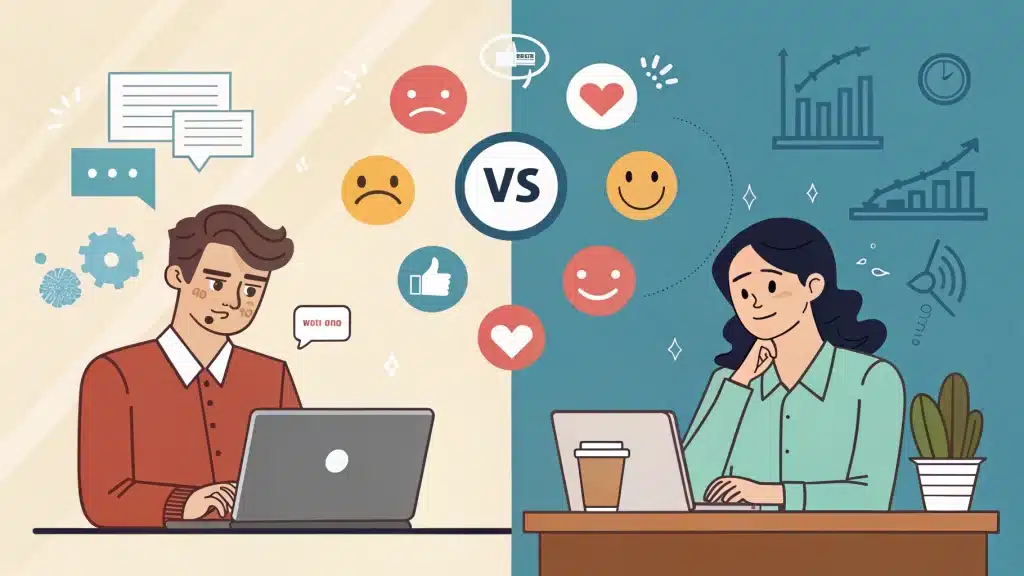
Now that you have understood the potential of Google advertising in the world of AI, we come to an important question: Should you manage the campaigns yourself, or use experts? In 2025, with the central role of AI, this question seems more urgent.
Post alone? If you have free time (and here we are talking about a few hours a week, regularly!), technological curiosity and a desire to learn the Google Ads system in depth, and you like to analyze data - you may be able to start managing campaigns yourself. Google has gone to great lengths to make the platform more user-friendly, with automation simplifying some of the process. The advantage is Full control on the budget and campaigns, and saving on management costs. The downside is that it requires A lot of time, continuous study, and the ability to deal with complexities. Mistakes can cost you money, and for businesses that want to manage complex campaigns, their ability may be limited. Remember: the time you spend on campaigns is the time you don't spend running your business.
Use a digital agency? This is often the recommended way for businesses that want professional and focused results, without "burning" time and money on attempts. Digital agencies specialize in managing Google campaigns, know the latest tools, understand the changing algorithms (including the AI), and know how to optimally optimize your goals. A professional agency will save you time, make sure that your budget is used correctly, and improve the chances of achieving your goals. The advantage is Peace of mind, professionalism, maximum utilization of the budget and access to advanced knowledge. The downside is The cost of services, which must be considered in the advertising budget.
From experience, it's always good for business owners to learn and understand the basics, it strengthens. But when it comes to real money and tough competition, it's usually best to leave the 'analysis' to the experts. Remember: a good professional not only 'manages' the campaign, but 'earns' you money back through optimization, accuracy and taking advantage of the opportunities that AI offers. This way your spending becomes a smart investment.
Ultimately, the decision depends on your budget, goals, free time, and the level of engagement you're looking for. What is important is not to be afraid to advertise, but to do it wisely, either by yourself or with the help of experts.
In conclusion: Google advertising 2025 - the way to success!
Advertising on Google is not just another means of marketing - it is a direct gateway to a wide world of potential customers.
Almost any business, small or large, can benefit from the wide variety of advertising options that Google offers, such as search ads, repair ads, and the display network.
Whether you are a local business that is looking to increase exposure in the immediate area, or a national company that wants to strengthen the brand, the tools that Google offers in combination with strategic thinking and professional experience - allow you to reach accurate results.
Success in campaigns depends less on the technology itself, and more on the person who operates it: smart planning, in-depth understanding of the target audience, adjusting the messages, ongoing monitoring of performance, and the ability to respond and improve along the way.
Even the most advanced campaigns need someone who knows how not only to manipulate, but also to analyze and adapt the strategy to the changing feedbacks and trends in the market.
Algorithms can help - but the guiding hand, human understanding and professionalism are the ones that make the difference.
So what is your next step at Google? With a proper understanding of the tools and professional guidance - the customers are already waiting there. Therefore, investing in an expert or a professional advertising agency may lead to optimal results and increased business income.